
Barbed Wire Fencing in Sydney: Strength, Security, and Smart Buying for NSW Conditions
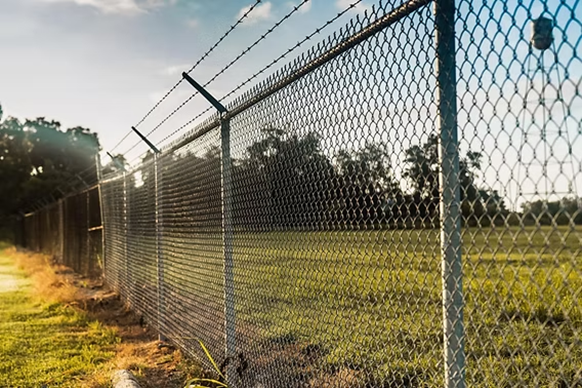
Barbed wire fencing is one of the most cost-effective and reliable ways to secure land, control livestock, and protect perimeters in Sydney and across NSW (New South Wales). Its enduring popularity stems from its ability to deliver strong, visible deterrence, an exceptional service life with minimal maintenance, and fast installation over vast or uneven terrain, making it the workhorse of rural and semi-rural security. When correctly specified, taking into account factors like wire gauge, galvanisation level, and the specific application (e.g., cattle, sheep, or boundary security), barbed wire performs exceptionally well, providing a robust barrier perfectly suited to the diverse and often harsh Australian conditions. The dual benefits of affordability and high security make it indispensable for agricultural properties, large-scale industrial sites, and government reserves throughout New South Wales. Its design, incorporating sharp barbs placed at intervals along the wire strands, is a psychological and physical deterrent, effectively discouraging unauthorised access by humans and preventing livestock from pushing through or leaning on the barrier. Choosing the right materials and installation techniques is crucial to maximising its strength and longevity, ensuring that the initial investment delivers decades of reliable perimeter security. What Is Barbed Wire Fencing? Barbed wire fencing, often simply referred to as ‘barb wire’ or ‘barb,’ is a time-tested and widely deployed perimeter security solution. At its core, this fencing material is manufactured from twisted strands of high-tensile or mild steel wire, typically two wires interwoven for strength, with sharp, pointed barbs meticulously placed at uniform, regular intervals along the length. The primary function of this design is to create a robust physical and psychological barrier. The presence of the sharp barbs actively deters both human and animal trespassers by making it difficult and uncomfortable, if not outright painful, to climb over or push through the fence line. This inherent characteristic makes it highly effective for preventing unauthorised access and maintaining clear boundary control. Enduring Popularity in the Australian Landscape Barbed wire remains a cornerstone of Australian fencing, particularly across New South Wales (NSW), for compelling practical and economic reasons: Effective Boundary Control: Despite its simple design, it delivers exceptionally effective definition and control for property lines, particularly across vast, remote tracts of land common in rural and regional Australia. Cost-Efficiency: It provides a superior level of security and boundary definition without the significant material and installation costs associated with heavier, more complex fencing systems like solid panels, chain link, or advanced security mesh. This makes it the go-to choice for large-scale fencing projects where kilometers of boundary must be secured affordably. Versatility in Application: Barbed wire excels in environments where maintaining high visibility and airflow is critical. Unlike solid barriers, it does not obstruct views or restrict natural ventilation, making it ideal for: Rural and Agricultural Settings: Securing livestock, defining paddocks, and protecting crops. Industrial and Commercial Sites: Establishing secure perimeters around storage yards, construction sites, and remote infrastructure. Construction Environments: Temporarily or permanently marking exclusion zones. Key Advantages of Barbed Wire Fencing The continued widespread use of barbed wire can be attributed to several significant benefits: Feature Description Strong Deterrent It offers a powerful dual deterrent, a strong physical barrier, and a significant psychological warning against intrusion, forcing potential trespassers to reconsider entry. Lower Overall Cost Compared to alternative security fencing (e.g., welded mesh panels or fully integrated electric fencing systems), the materials and installation labor for barbed wire are substantially lower, achieving excellent security return on investment. Minimal Maintenance (Especially Galvanised) When protected with a quality galvanisation (a zinc coating), the steel wire is highly resistant to the harsh Australian weather conditions, including rust and corrosion. This significantly extends the fence’s lifespan and drastically reduces long-term maintenance requirements. Scalability for Large Projects Barbed wire’s roll-form packaging and relatively light weight make it perfectly suited for defining long runs and large perimeters quickly and efficiently, facilitating successful large-scale fencing projects across vast NSW properties. Research & Sources McCallum, 2022, Barbed Wire, Wikipedia, https://en.wikipedia.org/wiki/Barbed_wire Encyclopaedia Britannica, 2023, Barbed Wire, https://www.britannica.com/technology/barbed-wire Is Barbed Wire Suitable for Sydney & NSW Conditions? Yes. Barbed wire fencing is well-suited to Sydney and NSW when hot-dipped galvanised steel is used. Australian environments expose fencing to UV radiation, rainfall, humidity, and in some areas, coastal air, all of which accelerate corrosion if inferior materials are selected. Hot-dipped galvanised barbed wire provides a protective zinc coating that significantly extends service life, making it suitable for both inland and metropolitan NSW sites. Research & Sources Australian Steel Institute, 2021, Galvanizing Steel for Corrosion Protection, https://www.steel.org.au AZoM, 2022, Hot-Dip Galvanizing of Steel, https://www.azom.com Understanding Barbed Wire Specifications Selecting the appropriate barbed wire specification is a critical decision that profoundly impacts the safety, long-term durability, and overall cost-effectiveness of any fencing project in Australia. Understanding the nuances of wire diameter, tensile strength, and roll size is fundamental to smart material purchasing and installation. Wire Diameter: Matching Gauge to Application The diameter (or gauge) of the barbed wire dictates its physical strength, rigidity, and the types of livestock or security challenges it is best suited to manage. Australian conditions often necessitate a choice between the following common specifications: Diameter Classification Primary Applications Installation & Handling 1.6mm Medium Duty Ideal for internal paddocks, boundary fencing for sheep, goats, and general-purpose rural boundaries. Offers greater flexibility, making it easier to handle, tension, and splice. Its lighter weight is advantageous for large, remote installations. 1.8mm Heavy Duty The standard choice for robust external boundaries, high-pressure areas, cattle containment, and critical security applications. Provides substantially higher breaking strength and resistance to stretching or deformation, crucial for maintaining effective tension over time. While a thicker wire (like 1.8mm) offers superior strength, the 1.6mm option remains popular for less demanding roles where ease of installation and a moderate cost saving are priorities. Standard Supply Format for Efficiency Across the industry, most barbed wire is conventionally supplied in 500-meter rolls. This standardized length is optimized for logistical efficiency and rapid deployment across the vast distances typical of Australian rural properties. Using 500m rolls significantly reduces