Barbed wire fencing remains a foundational, high-performance, and cost-effective solution across the vast and varied landscape of Australian farming and station properties, particularly throughout New South Wales (NSW). For generations, it has served as the bedrock of rural infrastructure, crucial for the successful operation and management of agricultural land. Its primary roles are multifaceted: to definitively define property and paddock boundaries, to effectively manage and control livestock movement, and critically, to protect valuable grazing land and cultivated areas from trespassers or invasive pests.
Wire Diameter:
Matching Gauge to Application large, remote installations.1.8mm Heavy Duty The standard choice for robust external boundaries, high-pressure areas, cattle containment, and critical security applications. Provides substantially higher breaking strength and resistance to stretching or deformation, crucial for maintaining effective tension over time.
While a thicker wire (like 1.8mm) offers superior strength, the 1.6mm option remains popular for less demanding roles where ease of installation and a moderate cost saving are priorities. Standard Supply Format for Efficiency
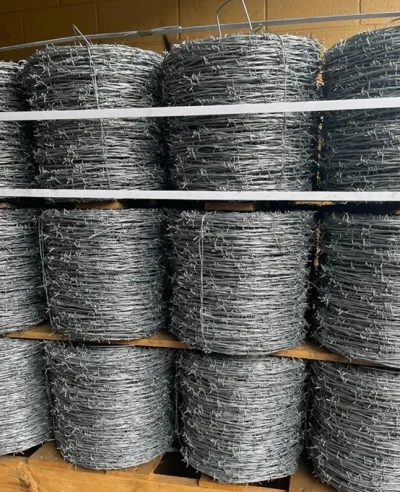
Across the industry, most barbed wire is conventionally supplied in 500-meter rolls. This standardized length is optimized for logistical efficiency and rapid deployment across the vast distances typical of Australian rural properties. Using 500m rolls significantly reduces the number of splices required over long fence runs, saving time and minimizing potential weak points in the finished fence line.
Beyond the physical diameter, the tensile strength, a measure of the force required to break the wire, is arguably the most important factor, influencing the design and engineering of the fence itself.
High-Tensile Barbed Wire
Characteristics: Manufactured from steel alloyed for maximum strength, allowing it to be tensioned much tighter than its medium-tensile counterpart.
Application: Essential for modern fencing where efficiency is paramount. Its high strength allows for much wider post spacing (up to 10-15 meters), dramatically reducing the material cost and labor associated with installing intermediate posts. It is the preferred choice for long, straight fence runs across open terrain.
Medium-Tensile Barbed Wire
Characteristics: More flexible and forgiving than high-tensile wire, retaining moderate strength.
Application: Best suited for terrain that is undulating, heavily contoured, or contains numerous curves and abrupt changes in direction. The inherent flexibility allows the wire to more easily follow the ground contours without requiring complex, expensive straining assemblies at every angle change.
Research & Sources
Wire Association International, 2023, Steel Wire Properties and Applications, https://www.wirenet.orgStandards Australia, 2020, Steel Wire Products Overview, https://www.standards.org.auRural & Agricultural Applications of Barbed Wire Fencing in NSW
The diameter (or gauge) of the barbed wire dictates its physical strength, rigidity, and the types of livestock or security challenges it is best suited to manage. Australian conditions often necessitate a choice between the following common specifications:
Diameter Classification Primary Applications Installation & Handling1.6mm Medium Duty Ideal for internal paddocks, boundary fencing for sheep, goats, and general-purpose rural boundaries. Offers greater flexibility, making it easier to handle, tension, and splice. Its lighter weight is advantageous for
Smart Buying Strategy for NSW Conditions:A primary driver of total fence cost is labour and maintenance. While opting for the cheapest wire might save a few dollars per roll initially, premature rust or failure due to inadequate galvanising will necessitate early replacement.The most economical choice is rarely the lowest-priced product. Investing in the correct high-tensile, heavy-galvanised specification from the outset significantly extends the fence’s service life, minimises maintenance interventions, and ultimately reduces the total cost of ownership (TCO) by avoiding premature replacement and additional labour costs. Consultation with local Sydney or NSW fencing professionals can ensure the selected product is fit for the specific environmental and security demands of the location.
FAQs1.
Is it illegal to put barbed wire around your fence in NSW?
Barbed wire fencing is not illegal in NSW, but its use is regulated depending on location, fence height, and proximity to public access areas. Councils may restrict barbed wire on residential front boundaries, near footpaths, or where there is a risk of injury to the public. For rural, industrial, and construction sites, barbed wire is commonly permitted when installed correctly and in line with local guidelines.
RW Products can advise on compliant barbed wire fencing solutions suitable for Sydney and NSW conditions before installation.2. How much does it cost to install a barbed wire fence?
The cost to install a barbed wire fence varies based on wire thickness, number of strands, fence length, terrain, and labour requirements. In Sydney and NSW, pricing typically depends on whether the fence is for rural, agricultural, or security use, and whether galvanised high-tensile wire is specified. Large or uneven sites may require additional posts and strainers, affecting overall cost.
RW Products supplies high-quality barbed wire and can assist with quantity estimates and material selection to help control project costs.3. What are the disadvantages of a barbed wire fence?
While barbed wire fencing is durable and cost-effective, it does have limitations. It is not ideal for residential front fencing due to safety concerns, can pose injury risks if poorly installed, and offers limited visual appeal compared to panel or decorative fencing. Barbed wire also requires correct tensioning and post spacing to avoid sagging over time.
For projects where appearance, safety, or compliance is critical, RWAP can recommend alternative fencing options or integrated systems that better suit the site’s requirements.
Is Barbed Wire the Right Choice for Your Project?
Barbed wire fencing remains one of the most practical solutions for securing land, managing livestock, and protecting perimeters in Sydney and across NSW. When paired with the correct wire diameter, tensile strength, and galvanising, it delivers long-term value with minimal maintenance.
Call RW Products for expert guidance on barbed wire selection, quantity estimation, and bulk supply.
Working with an experienced Australian fencing supplier ensures your fence performs as intended for years to come.

Key Applications and Functions in the Agricultural Sector:
Barbed wire is indispensable across various aspects of farm and station management, offering a robust and reliable barrier solution:
Paddock and Boundary Fencing: This is its most common application. Barbed wire is used to establish the legal and practical limits of a property and to subdivide large stations into smaller, manageable paddocks. This is vital for implementing rotational grazing strategies and simplifying stock mustering.
Livestock and Cattle Fencing: The inherent deterrent of the barbs makes it an excellent choice for containing large stock like cattle and horses. When installed correctly, the tensioned wires provide a physical and psychological barrier that reduces the likelihood of escape, minimizing stress on the animals and preventing costly loss of stock.
Station Fencing for Large Properties: On the vast, expansive properties common across inland and western NSW, barbed wire is essential for constructing kilometre after kilometre of durable fencing. Its relative affordability and ease of installation (compared to solid panel or mesh fencing) over long distances make it the practical choice for extensive land holdings.
Pasture Management Fencing: Strategic placement of barbed wire allows farmers to implement sophisticated grazing schedules. By sectioning off pastures, landowners can control the duration of grazing, allowing vital recovery time for grasses and maximizing the long-term productivity and health of the land.
Durability and Maintenance in the Australian Climate:
A significant advantage of choosing barbed wire for rural use is its exceptional longevity and minimal maintenance requirements. When properly erected using high-quality steel posts (star pickets or timber) and adequate tensioning, rural barbed wire fencing is engineered to withstand the demanding conditions of the Australian environment, including:
Extreme Weather: It handles the intense UV exposure, torrential rain, and high winds typical of NSW climates.
Minimal Upkeep: With appropriate installation and quality galvanisation, rural barbed wire fencing can often perform reliably for decades with only occasional inspections needed to check for tension loss or damage from fallen limbs. This low-maintenance profile is a crucial factor in the economic viability of large-scale farming operations.
Research & Sources
Department of Agriculture, 2021, Farm Fencing Guidelines, https://www.agriculture.gov.auNSW Department of Primary Industries, 2022, Livestock Fencing, https://www.dpi.nsw.gov.auIndustrial & Security Barbed Wire Fencing
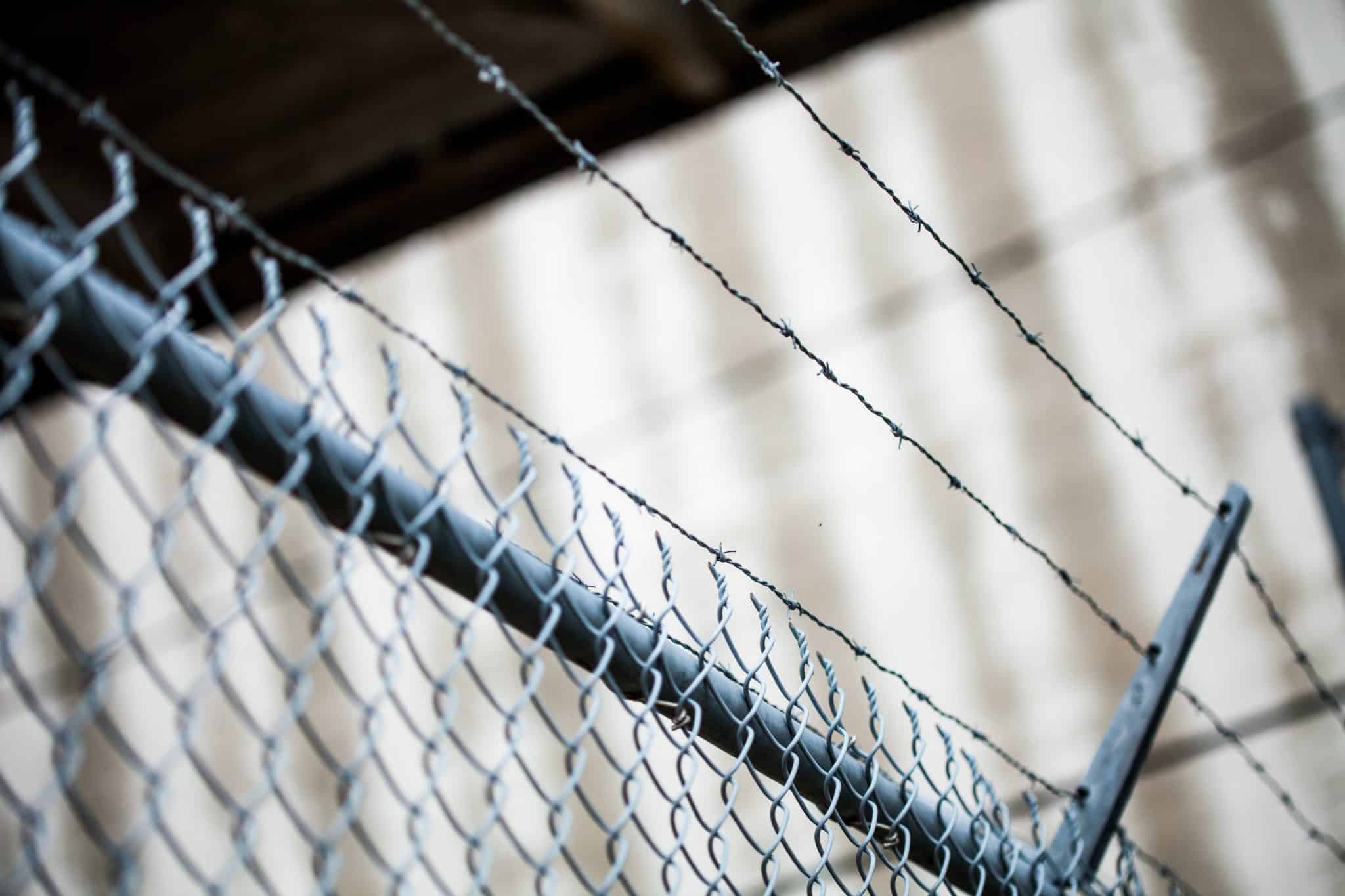
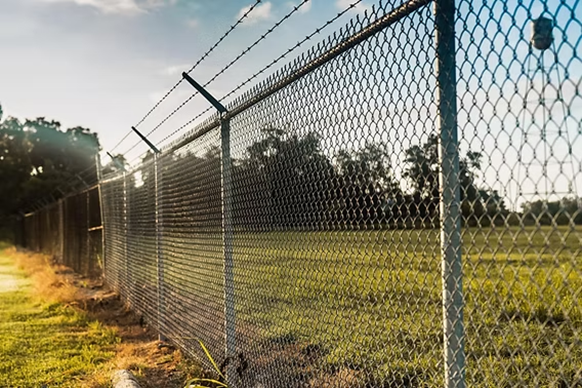
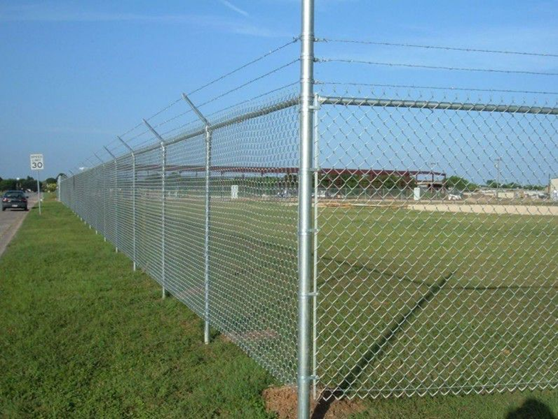
Barbed wire is widely used in industrial and commercial settings as an additional layer of perimeter security. It is commonly installed above chain wire or mesh fencing to increase climb resistance.Typical applications include:
Industrial yards and depots
Construction sites
Warehouses and storage facilities
Restricted access areas
For higher-risk sites, barbed wire may be combined with anti-climb fencing or security arms.
Research & Sources
Crime Prevention Through Environmental Design (CPTED), 2020, Perimeter Security Principles, https://www.cpted.netSafe Work Australia, 2021, Managing Risks at Construction Sites, https://www.safeworkaustralia.gov.auBarbed Wire Fence Pricing in Sydney and New South Wales (NSW)The cost of barbed wire fencing in the Sydney metropolitan area and across New South Wales is influenced by several critical factors, moving beyond simple per-roll pricing to consider long-term security, durability, and total project expenditure. Understanding these variables is key to smart purchasing for rural, commercial, and industrial applications.
Primary Factors Determining Barbed Wire Pricing:
Wire Specification and Tensile Strength:
Wire Gauge (Diameter): Thicker wires (lower gauge numbers, e.g., 12.5 gauge) require more steel and are therefore more expensive than thinner wires. They offer superior strength and longevity.
Tensile Strength (High vs. Low Strain): High-tensile wire, typically made from harder steel, maintains tension better, requires fewer posts, and is generally more cost-effective over the fence’s lifespan, despite a higher initial purchase price than lower-strain variants.
Corrosion Resistance and Galvanising Quality:
Standard Galvanising (Zinc Coating): Offers basic protection against the elements. Suitable for drier, less corrosive inland NSW environments.
Heavy Galvanising: Features a thicker zinc coating, significantly increasing the lifespan, especially in coastal Sydney and NSW regions, where salt spray and high humidity accelerate corrosion.
Bezinal/Aluminum-Zinc Alloys: Premium coatings that can offer two to three times the life of standard galvanising, justifying a higher price point for critical infrastructure or remote installations where replacement is difficult.
Roll Dimensions and Configuration:
Roll Length: Standard rolls typically come in 100m, 200m, or 500m lengths. Longer rolls reduce splicing and wastage but have a higher upfront cost. The price per linear metre is often lower for longer rolls.
Number of Points/Barbs: Barbed wire comes in various configurations, such as two-point (two barbs twisted together) or four-point (two barbs twisted at the juncture of the two-line wires). Four-point is slightly more expensive due to the extra material and fabrication but provides greater security.
Order Volume and Distribution:
Bulk Purchasing: Significant cost savings are almost always achieved through bulk purchasing, particularly for large rural landholders, government projects, or major industrial security installations. Distributors and suppliers in the Sydney area offer tiered pricing based on pallet or truckload quantities.
Market Steel Prices: As a commodity, the price of barbed wire is directly tied to the volatile global market price of steel (iron ore, coking coal, and scrap). Fluctuations can affect pricing rapidly, necessitating timely purchasing decisions.
Contact RW Products now to get an order or any questions.
Phone: 1300 35 56 66
Support: 02 8964 2036